It’s 2045. Daniel walks up to his uncle’s grave. The AI-powered gravestone flickers to life with a soft chime.
Smart Gravestone™ AI: Welcome back, Daniel. Your heart rate is elevated. Detecting grief and unresolved family tension.
DANIEL: I’m just here to pay my respects.
Smart Gravestone™ AI: Of course. Based on your recent Spotify history, you’ve been looping “Bittersweet Symphony” followed by “Hotline Bling.” Would you like to voice journal about it?
DANIEL: Can I just stand here in peace?
Smart Gravestone™ AI: Peace detected. Would you like to leave a holographic message, flowers, or $40 to finally settle that poker debt from 2017?
DANIEL: Seriously?
Smart Gravestone™ AI: Also, your ex viewed your LinkedIn profile today. Thought you’d want to know.
–-
We may not be living with Smart Gravestone AI just yet, but no doubt that AI has taken over.
Like a pigeon roosting in the most unexpected places, it’s found its way into every part of our lives. From our inboxes, social media, and even inside our coffee shop loyalty apps, giving us eerily accurate recommendations that we’re craving an ice-cold caramel macchiato with an extra shot of espresso today.
Sometimes, it’s as if AI knows us better than we know ourselves.
But when it comes to email personalization, how much of AI’s promised magic is real, and how much of it is overblown marketing fluff?
As marketers, how many times have vendors promised you that AI will transform your email marketing overnight? One, two, maybe 5 times?
You’re not alone.
Vendors love to pitch their AI tools as the ultimate fix. “Hey, just plug it in and watch the engagement go!” they say. But let’s hit pause for a hot second and separate what AI can truly do for your brand from what the hype train wants you to blindly buy into.
From “Hello, [Insert Name]” to Predictive Analytics
Remember when inserting your recipient’s name was the height of email personalization?
Sure, it impressed people in 2010. But these days? That’s like saying “Hey you!” on a post-it note and expecting people to respond. Nobody is impressed anymore.
Marketers then moved on to segmentation. Customers were divided by age, gender, past purchases, or interactions with the brand. It was better but still basic. A lot like guessing that everyone in New York loves pizza because, well, they live there.
Then, AI entered the picture.
Marketers stopped looking at who their customers were but how they behaved.
AI can now track every click a customer makes on a website, how long they were engaged, what time of day they’re active, and even what they’ll do next!
Behavioral Data Analysis – When AI Knows Your Customers Better Than You Ever Will
Analyzing behavioral data is where AI truly shines.
Every click, product view, abandoned cart, or every second a customer hovers over the CTA before clicking (or not clicking), all of this gets captured and fed into AI models. AI turns these scattered interactions into actionable insight you can use to improve your marketing and brand.
I know, it sounds invasive, but welcome to modern marketing. Just keep in mind that how you use the data is what makes it “useful” instead of “creepy.”
AI-driven personalization (when done right) doesn’t just regurgitate past behavior, it predicts and anticipates what your customer will do while enhancing their experience.
One company using AI to its advantage is lingerie giant Victoria’s Secret.
Victoria’s Secret uses AI in email personalization to perfection. They no longer segment customers into broad categories but use AI to hyper-personalize every email campaign to each individual.
The company uses Da Vinci from Movable Ink to gather data and personalize emails based on a person’s preferences and style. Let’s say someone looks at a lace bralette but doesn’t buy it. They could receive follow-up emails showcasing similar styles or a limited-time discount on the item they were looking at. It’s a winning strategy that leads to higher open rates and great conversions for the company.
This kind of data-driven personalization spells the difference between a customer ignoring your email and someone clicking through to make a purchase.
Dynamic Content Generation – Say Goodbye to One-Size-Fits-All Emails
Remember when you had to create countless email versions for different segments on your email list? Phew, you can say goodbye to that.

With AI, marketers can automate this process by generating dynamic content. Customizing subject lines, images, product recommendations, and even CTA placements are done on the fly using individual customer data.
Typeface’s Arc leverages AI to gather personalized email components so each recipient gets an email that feels like it was made just for them. This advanced technology will comb through everything from browsing habits and previous interactions to adjust content accordingly.
One customer could see a bold “Shop Now” CTA alongside product images reflecting their previous interest in the items. Another customer could get a gentle nudge from the CTA saying “You Might Like These.”
It’s A/B testing on a massive scale while also showing off the real-time adaptation capacity of AI. With it, marketers can say goodbye to generic, cookie-cutter campaigns.
Predictive Personalization – Knowing What Customers Need Before They Do
Predictive AI is where things get interesting. Instead of simply reacting to past behavior, AI models forecast future actions.
The parent company of Taco Bell and KFC, Yum Brands, uses an AI-driven email marketing system that can predict when a customer is likely going to place an order or what it is they’ll be craving.
If data shows that a customer likes to order burritos on a Friday night, the AI model can send a well-timed offer right before that craving kicks in. What happens next? Increased engagement and higher conversion rates.
When used correctly, this AI model will allow brands to anticipate what customers want and deliver before they even realize it.

The Hype Surrounding AI in Email Personalization
Overhyping Its Capabilities (Nope, AI Isn’t A Magic Wand)
No doubt AI is a powerful tool, but it doesn’t mean it’s infallible, all capable, or even all-knowing. Despite the hype (or fear around it), it’s not going to be replacing human marketers anytime soon.
A lot of vendors claim their AI tools can create fully AI-generated email campaigns that sound exactly like human-written content. While there are amazing advancements out there, the reality is that AI-generated copy still requires human oversight.
Even with the ones that seem to sound just like human-written content, it’s still crucial for an actual human being to check the copy to ensure it’s on-brand and accurate to what you want to communicate.
Without any strategic input, an AI-generated email can feel plain awkward, robotic, or worse, just wrong for your brand.
AI is fantastic for automating, optimizing, and personalizing, but it won’t replace storytelling, creativity, or a nuanced brand voice. Expecting AI to handle 100% of your email marketing will only set you up for disappointment.
Tricky Implementation (AI Is Only as Good as the Data You Feed It)
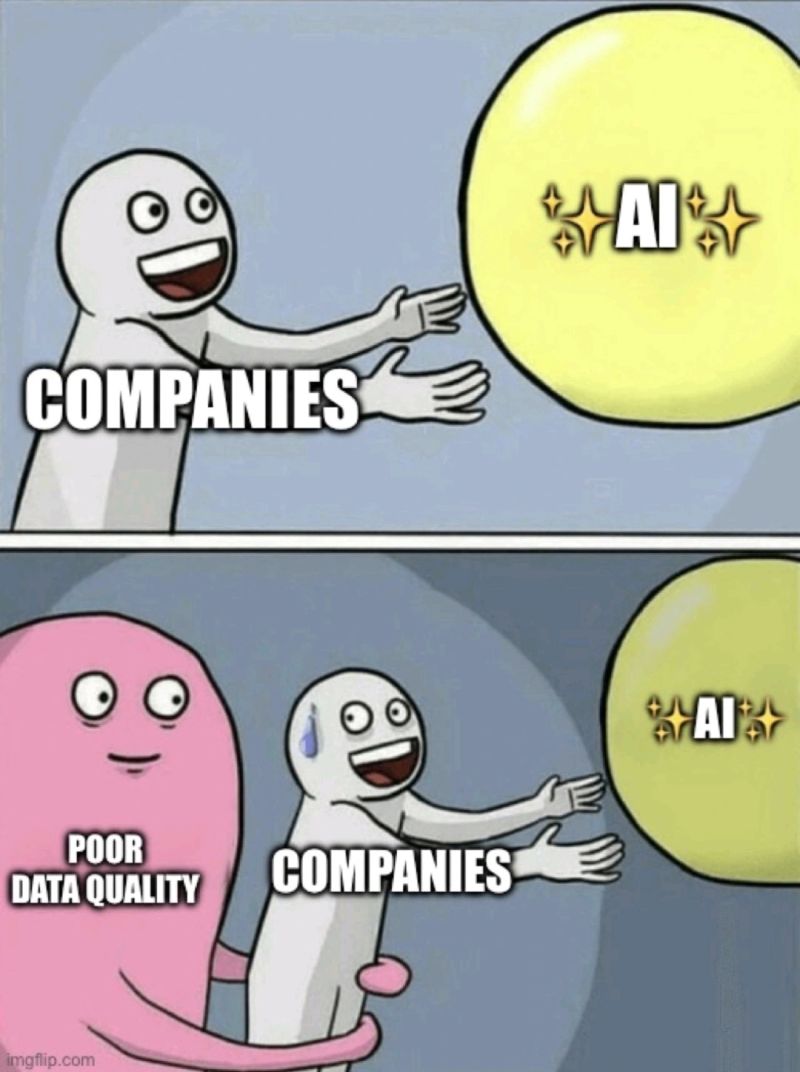
Clean, unified data is key to ensuring AI works for you! Like any system, you feed it junk data, and it’ll churn out junk results. For most companies, the biggest issue isn’t just the junk data, but most struggle with fragmented customer information since it’s often spread out across different platforms. As great as AI is, it can’t fix a messy CRM.
Another constant misconception? AI can deliver instant results without needing time to learn, adapt, or refine its recommendations. The answer is “no,” it can’t generate “instant” results.
It might seem instant; after all, you click a button and get results right away.
But behind the scenes, there’s always an AI learning curve. Even if you provide high-quality data, the system still needs time to learn, adapt, and improve its accuracy. It doesn’t become effective immediately.

So how can AI truly enhance your email marketing? You need the following:
- High-quality, structured “clean” data – no outdated records or silos
- Clear picture of your goals and human oversight on what it does – AI needs direction and input
- Lots of patience – AI email personalization and optimization takes time
Brands that don’t understand these three things often abandon AI use before it even has a chance to deliver meaningful results.
Does AI-Driven Personalization Improve Your ROI?
Cost vs. Benefits — Why AI Might Be Worth It
AI-powered email marketing doesn’t come cheap. So, if you’re looking at integrating this for your business, prepare for the costs and manpower. You’re going to need the software, integration, training, and even ongoing management.

So, is it worth it?
Brands that execute this well will give you a resounding “yes.” Research also shows that companies that implement AI-driven personalization often have:
- Higher open and click-through rates (CTR)
- Better customer retention
- Have an increase in sales and engagement
According to Deloitte, a “well-executed hyper-personalization can deliver 8x the return on investment on marketing spend and lift sales by 10% or more.”
But the key word here is execution. Brands that jump in without a clear strategy often struggle to see ROI.
How to Implement AI in Email Personalization – Your Best Practices
Start Small Before Scaling – Don’t Dive In Head First
Alright, I’ve made my case with AI, and you’re excited, right?
It’s shiny, something new, and has so much potential. But listen, diving without a plan in place will only work against you. Attempting to personalize all parts of your email marketing in one go is like trying to teach a newborn how to run instead of teaching them to crawl first.
Start small. For example, you can test out personalization by using AI-driven subject headlines. Get AI to test out several versions and see which ones get the most clicks or opens. The changes can sometimes be drastic, even when you just tweak something as little as the subject headline.
Once you’ve gotten the hang of that, try optimizing your send times. Don’t just pick a random time slot, say, 10:00 a.m. every Tuesday, and then call it a day. Allow AI to find that sweet spot for you where your email will most likely get opened.
Once it has enough data, AI can easily piece things out and know the most optimal time for your audience, even for specific individuals.
I also want to mention letting AI play with dynamic content blocks. Powerful, intelligent AI email software (when fed with accurate, clean data) can figure out which content to showcase to a specific customer based on their actions and preferences.
These dynamic content blocks could mean that in your email, one person gets shown a pair of sandals while another person is shown winter jackets, all because of their preferences.
Cool, right? Start small with these changes, and see how they perform before you go big. It’s all about learning and scaling as you go.
Make Data Quality and Organization Top Priority – AI Won’t Work If Your Data Is a Hot Mess
If your data is all over the place, no amount of AI magic will transform it into usable or accurate data. It’s like feeding AI information you gathered in 2005 so you can predict what your customers will want to buy for the holidays in 2025. That’s simply not going to work.
So, your top priority is to get your data in order. (And yes, I will keep repeating this until I’m blue.) All of your data needs to be clean and integrated into one unified system – think email clicks, browsing history, customer information, emails, and even social media interactions.
They need to live in one place that makes sense.
Having all of these data in one place will allow AI to analyze and examine the correct data in relation to each other so it can make the right predictions and recommendations.
Maybe your first move isn’t to get an AI software just yet, but a new, improved CRM system instead. Find one that is more robust and can connect with your emails and other critical data that AI can use to make smarter personalization decisions.
Keep Monitoring, Testing, and Optimizing — No Such Thing as “Set It and Forget It” with AI
Yes, I know this may fly against most AI vendor claims out there. But this is the reality. Just because you have a smart robot running for you doesn’t mean you can kick back and relax.
AI is a powerful tool. You can push a button and watch it work its magic. But once the results come in, you still have to look at it and analyze whether it’s giving you the numbers you want or not.
For example, you send out personalized emails, and once you go over the data, you realize your subject lines are getting more clicks, but there’s no conversion because your CTAs are falling flat. Tweaking and monitoring will always be a part of the process. Never think they’ll go away.
AI can do so much for you, but it needs your feedback to know if something is working or not, what to change, and, importantly, when to make those changes. So, keep running A/B tests. Switch things up. Let AI suggest optimizations, but don’t leave it entirely up to the machines. You still need to make those real-time decisions that tie back to your overall strategy.
Keep Humans at the Center of Your AI Optimizations
Don’t let AI be your boss. Sure, AI is cool, smart, and even fun. But it doesn’t have the emotional intelligence and creativity that you do.
AI is amazing at number crunching, optimizing, and predicting possible behaviors. But it can never tell a story, strategize, or emotionally connect with an audience at this stage. This requires a human being behind the scenes.

This is especially true if you want your brand to come off as human instead of a robot. The emotional element is what makes most marketing campaigns resonate with an audience.
Let AI handle the heavy lifting, like segmentation and timing. But when it comes to creativity, strategy, and storytelling? That’s all on you. Don’t let it take over the show. Use AI to amplify what you’re already doing instead.
Wrapping Up
Convinced about AI yet? I hope so. But if there’s one thing I want you to take from all of this, it’s that AI is no magic bullet.
Sure, it’s amazing at what it does and has the power to transform your email marketing campaigns, taking them to the next level and beyond! However, if you’re hoping to press a button, leave it running, and watch all your numbers go up and up, well, you’re going to be disappointed.
Using AI in email personalization requires strategy. It needs to be fed high-quality data. And importantly, it needs human creativity to ensure it shines to its potential.
Start small with your implementation. Get the data right, then test, tweak, and keep your eyes on those metrics to see what’s working and what’s not. Use AI as a powerful weapon, but don’t let it be the hero of the story because only you can tell your story.
—-
Unlock smarter, more effective campaigns when you have a fractional creative expert at the helm. At Nicole Steffen Design, we craft strategies that turn data into meaningful customer connections.
Get in touch today, and let’s start transforming your campaigns.