
Once upon a time, during morning standup…
Jordan (marketing lead): Good morning, everyone. Let’s begin. Taylor, let’s start with you.
Taylor, excited, pulls up a freshly made sales deck.
Taylor (non-designer): Hey, took a stab at the new deck. Felt like it needed personality. So, I jazzed up the title slide. Thoughts?
Jordan: Is that Papyrus?
Taylor: Hey, you noticed! Yeah, felt mystical, like a wise startup monk.
Jordan: Um, we sell B2B analytics.
Casey (designer): And is the logo in gradient?
Taylor: Good eye, it’s gradient gold! Goes with the Papyrus, yeah?
Jordan: Um, good initiative. *thinks* Why did I work so hard on those brand guidelines?
—
Brand standards don’t fail because people hate them. They fail because no one knows how to use them.
You can’t expect consistency when your logo’s been stretched to death and someone thinks Papyrus is an “on-brand vibe.” If you want non-designers to get it right, you have to teach brand like it’s a team sport, not a PDF.
So here’s how to make brand standards make sense for people who might mistake Figma for a type of pasta.

Ditch the Decks, Start With a Story People Can Feel
You know what non-designers don’t care about? Typography hierarchy. Brand grids. The difference between Medium and SemiBold.
What do they actually care about? Whether it feels right. That’s the vibe, not in the TikTok sense, but in the human sense. They’re asking themselves, Does this sound like us? Look like us? Act like us?
If it doesn’t, they’ll notice, even if they can’t tell you why.
And that’s where most brand training goes sideways. You’re tossing people a rulebook when what they need is a character sketch.
So give them one.
Make it vivid and make it human. Is your brand the scrappy underdog who always finds a way? The reliable friend who never flakes, answers emails on time, and knows when to crack a joke? The industry nerd with impeccable references and zero ego?
Paint that picture so they see what you see. You’ll be amazed how quickly people start making on-brand decisions without needing to ask. Because instead of just following rules, they’re channeling a personality.
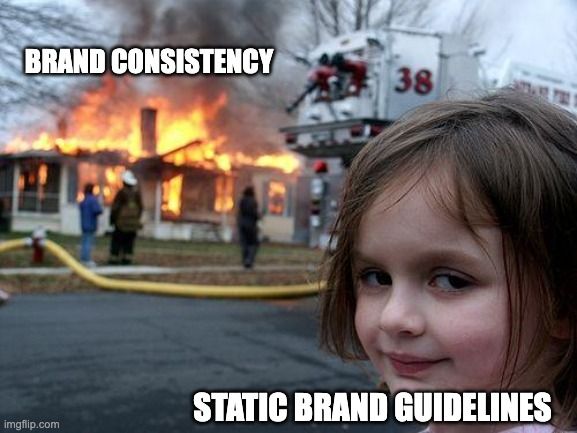
And no, you don’t need a brand novel to get there. A simple half-page persona written in clear, conversational English will do more than a 90-slide deck full of Helvetica and hex codes.
When people feel the brand, they don’t forget it. And more importantly, they start living it, even outside the design department.
Make Brand Tools That Work Where People Actually Work
Mood boards are fun. Useless, sometimes, but fun. They’re the Pinterest version of branding – good for getting inspired, bad for getting things done.
And most brand systems? They’re just glorified mood boards in disguise. Designed for perfect conditions. Gorgeous in Figma. But, drag one of those pristine templates into a pitch deck five minutes before a client call, and it falls apart.
Your brand needs to survive in the wild. That means building tools that show up where your people already are, inside pitch decks, product launch emails, Slack threads, LinkedIn posts, Notion pages, and yes, even inside that janky CMS that won’t load custom fonts or handle SVGs.

If your brand only works when the lighting is perfect and the fonts render right, it’s not a brand system, but a museum exhibit.
Always design for reality, not fantasy.
That means giving your teams templates they can use. We’re talking about real, editable formats, not locked PDFs or Keynote files from 2016. It means pairing assets with just enough guidance to avoid disaster. Think short Looms, annotated examples, two-sentence tips that show how to use the system without butchering it.
Because the truth is, no one’s got time to interpret your brand taxonomy when they’re frantically resizing a headshot in Google Slides.
If your tools can’t hold up in a 3-minute deck sprint or a last-minute PR fire drill, they’re not working hard enough. And neither is your system. Make it usable, easily findable, and of course, resilient.
Treat Brand Rollouts Like You Would a Product Launch
If you launched a new product with one email, a dusty PDF, and a shrug, you’d probably be looking for a new job. So why do we still roll out brand systems like that’s enough?
Brand training isn’t a checkbox. It’s a behavior change. And changing how people write, design, present, and communicate is tough work. It takes more than a static doc and a hope that people “get it.”
What you need is a campaign.
A proper internal rollout should feel like you’re launching something exciting, because you are. You’re not just dropping new logos and templates. You’re redefining how your company shows up in the world. That deserves some ceremony. Hey, even a little hype.
Roll it out in phases. Think of it like onboarding your team into a new product experience, one they’re invited to shape, not just comply with.
Start with a soft launch. Show examples and don’t just dump rules. Get creative, maybe run a “Fix the Ugly Deck” challenge or host a funny roast session of the previous decks. Things like this are way more memorable than a 45-minute Zoom presentation on font weights.

Because the goal isn’t just to get the brand “right.” The goal is to get people excited to use it. They should feel proud to share it and confident enough to bring it to life in the day-to-day.
Recruit the People Who Already Give a Damn
Every team has that one person, the unofficial guardian of taste. The one who notices when the font’s off, the spacing’s weird, or the copy has weird energy. And odds are, they’re not on your design team.
They might be your ops lead who secretly redesigns internal decks before every leadership meeting. Or that support rep who rewrites canned responses because the tone was off.
These people care and notice details. They feel when something’s off, and more importantly, they try to fix it because they give a damn.
Find them.

Loop them in early. Let them beta-test templates, preview tools, or weigh in on tone. These people are already acting like brand stewards, even if their title says nothing about branding or design.
This is where brand advocacy starts, not as a program, but as a recognition of who already cares. Give them tools that match their level of interest. Not everyone needs the 60-page design bible. Some just need the starter pack.
Consider building multiple versions of your brand guide, tailored to different roles and levels of intricacy, from the quick-start for sales to the deep-dive for power users.
When people have the right version for how they work, they’re more likely to use it and advocate for it.
They’ll become the ones helping others apply the brand, not because you told them to, but because they want to.
Teach Principles, Not Just Rules (Because Real Life Is Messy)
Templates are great until they aren’t.
They break. Get stretched, hacked, duct-taped into a last-minute slide. Someone swaps the font because “Arial looked more professional,” or changes the color because “red felt more urgent.”
You can’t pre-template your way out of every use case. Like it or not, real life is messier than your brand book. That’s why rigid brand rules only get you so far.

What you need is a shared understanding, brand principles that people can actually use when the situation gets weird.
Instead of asking teams to memorize a list of dos and don’ts, teach them the why. Why the voice is direct, not flowery. Why clarity beats cleverness. Why it’s okay to break hierarchy if it means making something more accessible.
When people understand the intent behind the brand, they start making better judgment calls on their own. That’s the goal. Never perfect compliance, but informed, thoughtful improvisation.
Because there will always be weird tools, one-off slides, chaotic launches, rogue vendors, and dashboards built into apps that feel like they were coded in 2008.
In those moments, your brand’s success depends on the judgment of the person hitting send. So teach them how to think, not just how to follow instructions.
Measure Brand Confidence, Never Just Compliance
Yes, you can track template usage or a rogue font audit. You can also spend your Thursday afternoons scanning decks for that one shade of blue that refuses to die. But if that’s all you’re measuring, you’re missing the point.
The real metric isn’t compliance, but confidence.
Ask yourself: Do your teams feel good using the brand without having to ask for permission? If the honest answer is “eh, not really,” you don’t have a people problem. You have a system problem.
Most off-brand behavior comes from hesitation. It’s someone who doesn’t know whether this file is up to date or is worried they’ll mess up a layout. They could be digging through five folders for the right logo, giving up, and grabbing an old one from Google Images (we’ve all seen it).
Brand confidence comes from access, clarity, and support. That doesn’t mean more rules. It means fewer barriers.
Set up a low-stakes Slack channel where people can ask dumb questions without feeling dumb. Add a feedback button to your brand hub that says “What’s missing?” and use what people tell you. Hold quick, recurring office hours, say, 15 minutes a month, for live questions or brand gut checks.
These sound like small things. But they’re not.
Because when your team feels safe enough to ask and confident enough to try, they’ll stop second-guessing and start becoming brand people.
Wrapping Up
You want consistency and cohesion. You want to stop stumbling across Canva decks in Comic Sans with a logo from 2019? (Don’t laugh, it happens more than you think.)
Then build a brand system people want to use.
Not one that looks amazing in a case study but falls apart in a sales deck. Or one that only works if a designer’s holding the reins. An intuitive system that’s built for real people and real deadlines.
Because if your brand only works when a designer is involved, it doesn’t work.
—
Need help creating brand tools your whole company can use? Nicole Steffen Design helps you build flexible, intuitive brand design systems that scale with your team, not just your design stack. Let’s chat.